
Classical Music is Already Dead.
(and we can't save it)

I see posts from other musicians who are always sounding the alarm, but never providing any concrete actionable solutions.
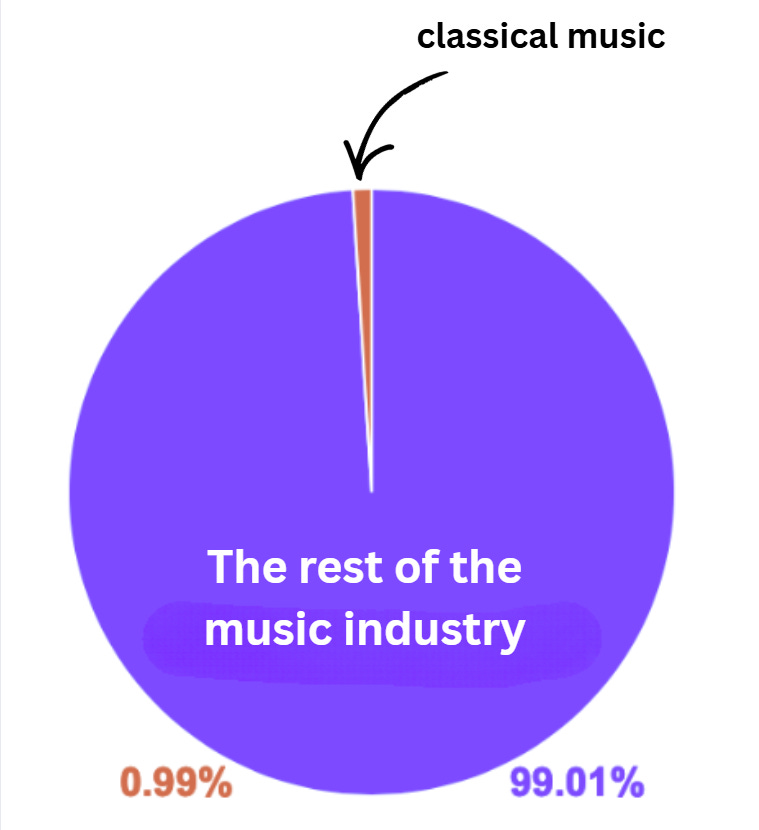
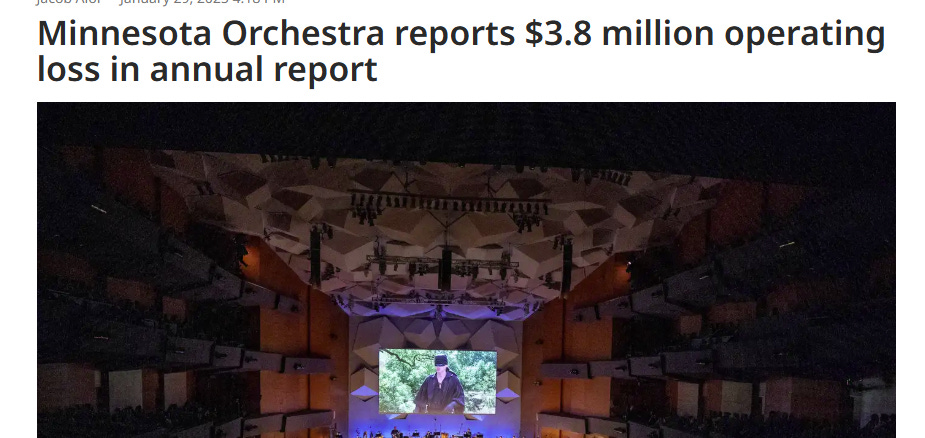
Let’s face it, many orchestras will not last another 20-30 years. Even major orchestras from all over the world have large deficits and many rely on state subsidies to get by. The classical music industry is on borrowed time. The writing is on the wall and it is written in blood.
The donor base and audiences are shrinking every year. There’s no doubt that COVID-19, a disease that targeted older people, had a significant impact on the audiences and donor bases of classical music.
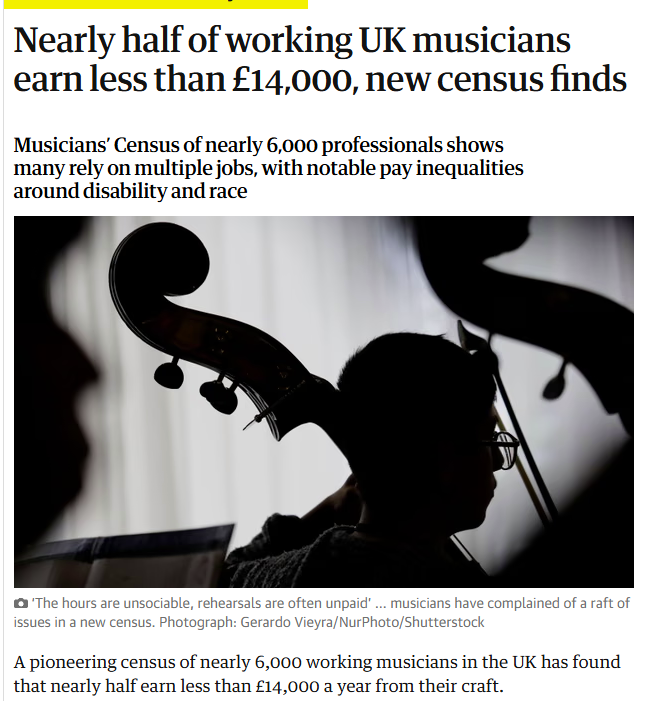
Orchestras are closing ever year. Low wage per service gigs are the norm. Even world famous orchestras all over the world like the London Symphony have unlivable wages. You’ve got LSO players commuting from outside London because they can’t afford to live there. Bear in mind, Europe only has it slightly better than America.
If you want a six figure salary with the Los Angeles Philharmonic, you’d have better chances if you were a USC or Colburn graduate for a whole laundry list of nepotism reasons. Unfortunately your chances at that boils down to how wealthy your family is, how early did you start on your instrument is and how eager your family was to invest in your musicianship early on.
Who is our audience anyway?
Most of the classical music audience is:
A) Old People
B) Other Musicians ( lol )
The new donor base isn’t going to be younger people because of the economy. People who aren’t able to afford rent, or buy a house, or have kids are not going to donate to an orchestra. Not to mention younger people not caring about classical music in the first place.
We are misdiagnosing the disease.
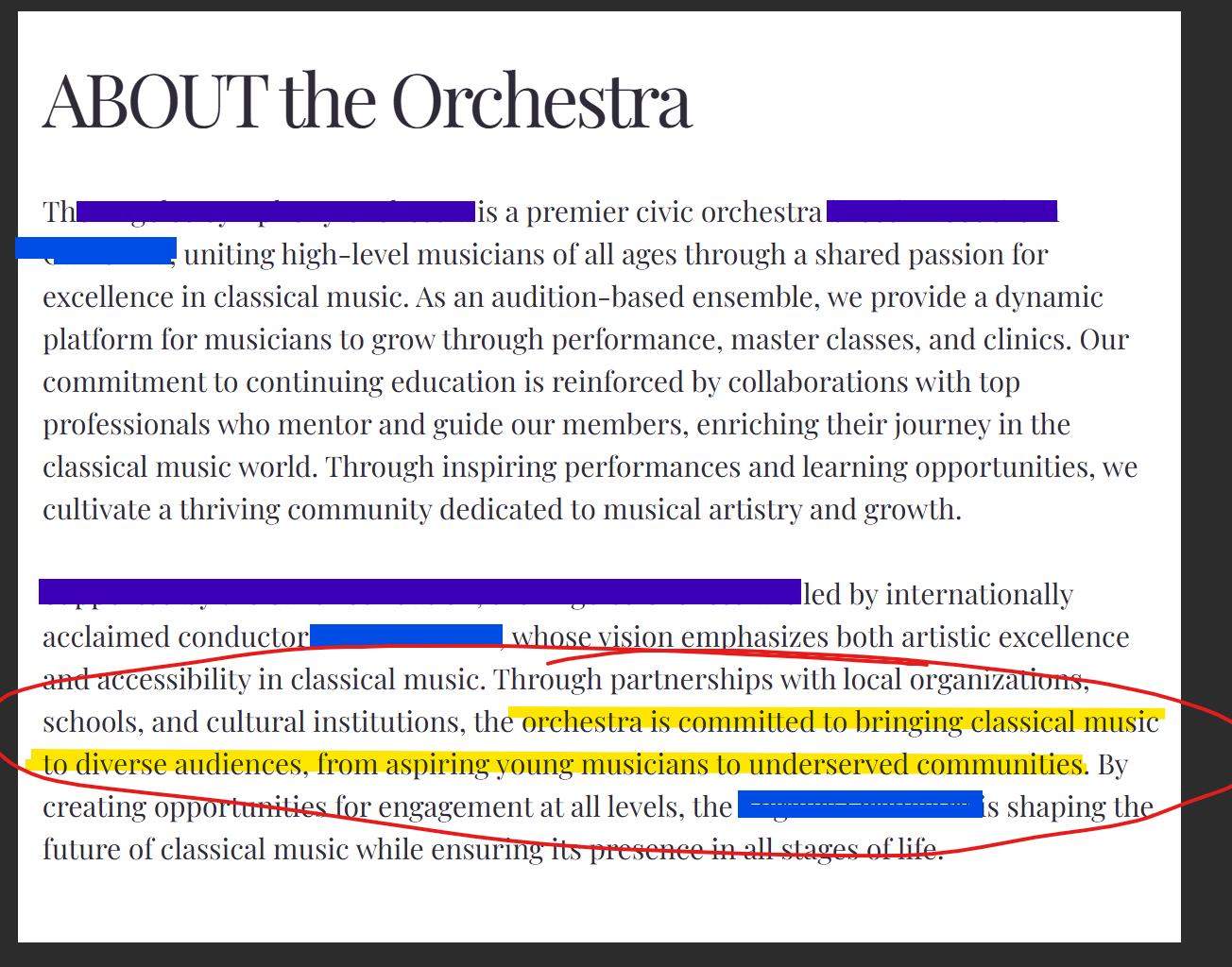
It isn’t an education problem. Normal every day people don’t need to be more informed, educated or enlightened about the “greatness of classical music”. Classical music loves to cling to the idea that they’re “serving the community” and “providing a valuable public good” when all we really do is serve ourselves.
Ask yourself this: Do these “underserved” communities even want to be educated or served by classical music? What makes you think these communities are even “underserved”?
This is a classic case of cultural colonialism and white savior complex.
This is musical gentrification.
It isn’t an “old people” problem.
Having more young people in orchestras or arts admin isn’t going to magically fix it if nearly all of those musicians were brought up in the “classical music system”. Young people (Age 45 and under) in music school are taught in the same insular system that all the older generations were brought up. You were taught to think within the same framework. You were taught to tow the party line. You were taught that this is the way things are done. You may be younger and have “fresh” ideas, but you likely won’t have the skills or the mindset to execute them well. If you spent 8 years in music school, you weren’t taught marketing or entrepreneurial skills. Your professors definitely don’t know how to market beyond a bland Canva template poster shared on your story.
It’s simply the blind leading the blind.
It isn’t a marketing problem.
Hopping on social media trends if you’re a classical music account most of the time only makes you go viral on musician Instagram or anything adjacent. Going viral doesn’t always translate to ticket sales. If you go viral and it reaches a global audience but not your local audience, those aren’t people who buy tickets.
If you look at many orchestra’s followers on social media. You have mostly musicians, some fans and bot accounts they paid for. (Did we also forget a lot of older audiences don’t use social media?) Ever notice how an orchestra account with tens of thousands of followers seems to only get under 100 likes? Or they hide their likes? They bought fake followers so they’re effectively shadow-banned.
There are exceptions where orchestras with great social media teams will move the needle, but even those still rely on a huge donor base to keep them afloat and still run huge deficits.
So what’s the solution?
Am I talking out of my a**? It’s not “we need to bring classical music to underserved communities”. It’s not “we need to do more community engagement”. It’s not “we need to hop on every social media trend”.
Here’s the reality.
Most people’s perception of classical music is:
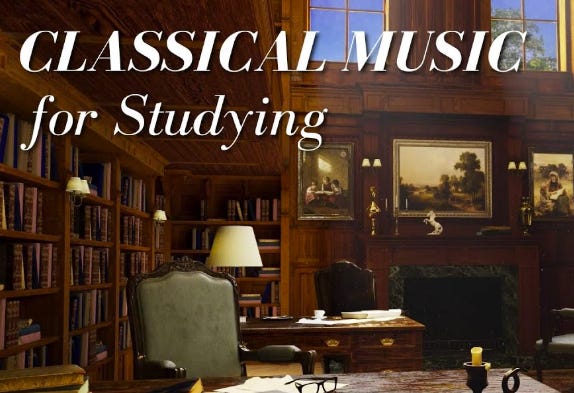
OR…
Being put on hold with your evil health insurance company who denied your claim to your medication that you need to live for over 2 hours while 8 bars of a Beethoven Sonata plays on a loop.
Changing this perception is close to impossible to solving.
The artform is inherently inaccessible. We have to admit that. We complain that we aren’t making classical music “accessible”. when you can find an orchestra in every middle of nowhere town. There is PLENTY OF ACCESS.
It isn’t some easy solution like lower ticket prices or whatever cheap solution we can can come up with either. I see all of us debating in comment sections on whether we should let people clap in between movements when that is the wrong conversation.
We are asking the wrong questions and answering with the wrong solutions.
Symphonies, concertos, etc. are too long and boring to most people. Walk up to a random person in a Kroger’s and ask them what’s their favorite Mahler symphony. Chances are, they have no idea who Mahler even is. They have no idea who this “big name soloist” who’s only famous in the musician world and frankly, they don’t care.
We can’t keep going around saying “music is a universal language” and apply it to classical music when it’s now the least universal and accessible form of music.
What about putting classical music next to film or game music?
Classical music tends to be longer than a film or game suite. So you’re going to have lower ticket sales because it’s an entree or appetizer the audience didn’t order and audiences will feel scammed into paying for an expensive ticket with music they didn’t even ask for.
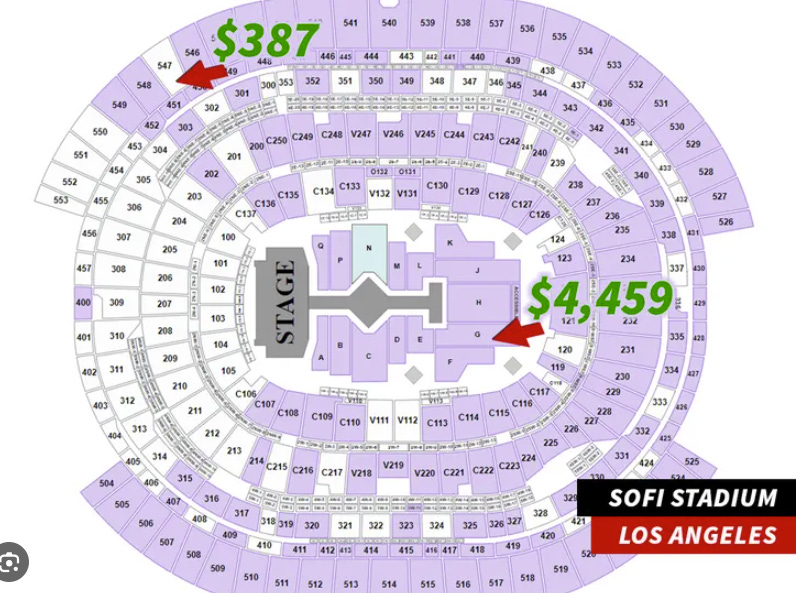
Going on, ordinary people will spend hundreds to thousands of dollars on their favorite artist’s tickets. No one wants to save up for weeks to buy tickets to see a Beethoven concert. They will do that for every new pop star who makes the headlines every year. See this Taylor Swift screenshot and see how much she can get away with. On the high end of Los Angeles Philharmonic prices is in the upper $200s.
We simply can’t compete with this and whether we want to admit it or not, if you want access to newer younger audiences, you are competing with Taylor Swift and every other pop star in the world. You may think Taylor Swift’s music sucks. But it doesn’t matter what you think. What matter is the millions of people who think her music is good and are willing to pay or even go into debt, to attend her concert.
To us musicians:
We also need to have a reality check when we self-inflate our own importance. Classical music isn’t “saving the world” or changing lives. Most of the time, we falsely believe we’re more important than we actually are.
“We are changing lives and building community with this Mozart & Tchaikovsky concert”.
No, you’re just padding your resume and your ego.
Most of the time, this inflated self-importance comes from musicians seeking validation from a “big break” because it’s a tough industry. Because of this cutthroat business, musicians base a lot of their self-worth on what prestigious conservatory they went to. What summer festivals they went to. What orchestras or conductors are on their resume. We cling to these titles and accolades because the economic reality is so bleak. The unfortunate truth is none of the accolades matters and many of us can’t accept that. When you make your debut with a famous orchestra whether as a soloist, composer, conductor, or you’re playing in the violin section, you are only benefitting yourself—not anyone in the community. Frankly, if you were removed from a concert, the world will keep spinning and no one would miss you. We can keep gaslighting ourselves into thinking that our mission in classical music can be community-centered, but there is no easy way to tie it to community without, at best, looking like a stretch and, at worst, musical gentrification.
Most of us trained in the music school system are doomed to fail if you’re following the “success guidelines” of classical music and the only people who tend to succeed are people who have innate entrepreneurial instincts. Or money. Lots of money. Parents subsidizing their living expenses. Trust funds.
Oh, do you want to have a conducting or soloist career? Go compete in the major competitions in Europe where they arbitrarily give you an expiration date at age 35. Spend the thousands of dollars in flights, hotels and other costs associated in going to prestigious masterclasses or competitions. Just make sure you’ve conducted the London Symphony or had your soloist debut with Concertgebouw by the time you’re 26 and you will be fine.
Survivorship bias is rampant in our world. We never see the tens of thousands of musicians who quietly quit. We never see those musicians primarily work a “real job” as their main source of income, teach and freelance on the side. (Not that there’s anything wrong with that, you get to define what your version of success looks like at the end of the day). All the while, most of us were saddled with inhumane amounts of student debt—sentencing us to a lifetime of indentured servitude all because we wanted to dream.
At the end of the day, we have all been at best, misled and at worst, scammed. At least, most of us have been. We are surrounded by professors, celebrity soloists, prestigious conductors, etc. who will tell you just how important classical music is to the world and how it’s up to all of us to keep it going. It’s such an echo chamber that we forget the rest of the world exists and doesn’t care about this art form. I never trust a musician who’s only friends with other musicians.
We also need to reject the idea that our “artistic excellence” deserves funding. Just because you think your avant-garde string quartet piece is important doesn’t mean you deserve a grant to fund it or an audience to appreciate it. This comes from a place of entitlement that’s detached from reality and only worsens the problem. People vote with their wallets. If you can’t market your own music and make it financially viable, a grant or a donor should not come to save you because you think your “artistry” needs to be funded because it’s important for the community.
Important for who exactly?
When the “classical music system” says we need to support the arts, they’re not referring to gardening. They’re not referring to painting. They’re not referring to animation. They’re referring to their slice of the arts while trying to claim to represent the whole pie. Yes, our dead European white guy music or a trust fund composition major nepo-baby should be given a grant to fund their “pursuit of artistic excellence”.
Adding on a related note, I believe musicians should be paid more. Yes, we have decades of training like a doctor or lawyer. But we shouldn’t use that to justify that.
Doctors and lawyers save lives. A bad decision made by an engineer can cause a plane crash. A bad performance isn’t going to kill anyone. We’re unfortunately considered by many a “nice to have”. The reality is, we classical musicians are not that important to most people and we can’t really change people’s perceptions by being hostile.
With that said, that doesn’t mean we shouldn’t be fairly compensated, I am just saying that most musicians are considered by most, replaceable and nonessential. Every member of the orchestra can be easily swapped from a fresh graduate from any of the major conservatories. The “classical music industrial complex” designed the system to pump out endless graduates so they could generate revenue to fund music schools. Had their be simply less musicians being produced every year? This problem would be only slightly better.
There will always be someone willing to undercut you or play for free and mindlessly spreading awareness is like yelling at someone for not recycling when it’s the plastic industry that keeps making more water bottles.
So what’s the solution? Am I not also sounding the alarm too?
Well here it is and it’s unfortunately very difficult to solve in America because it intersects with so many other issues. It’s ironically “we need to educate” but this is how it should be done.
Music education needs to start as early as pre-school and a robust program needs to be in every school regardless of zip code or wealth.
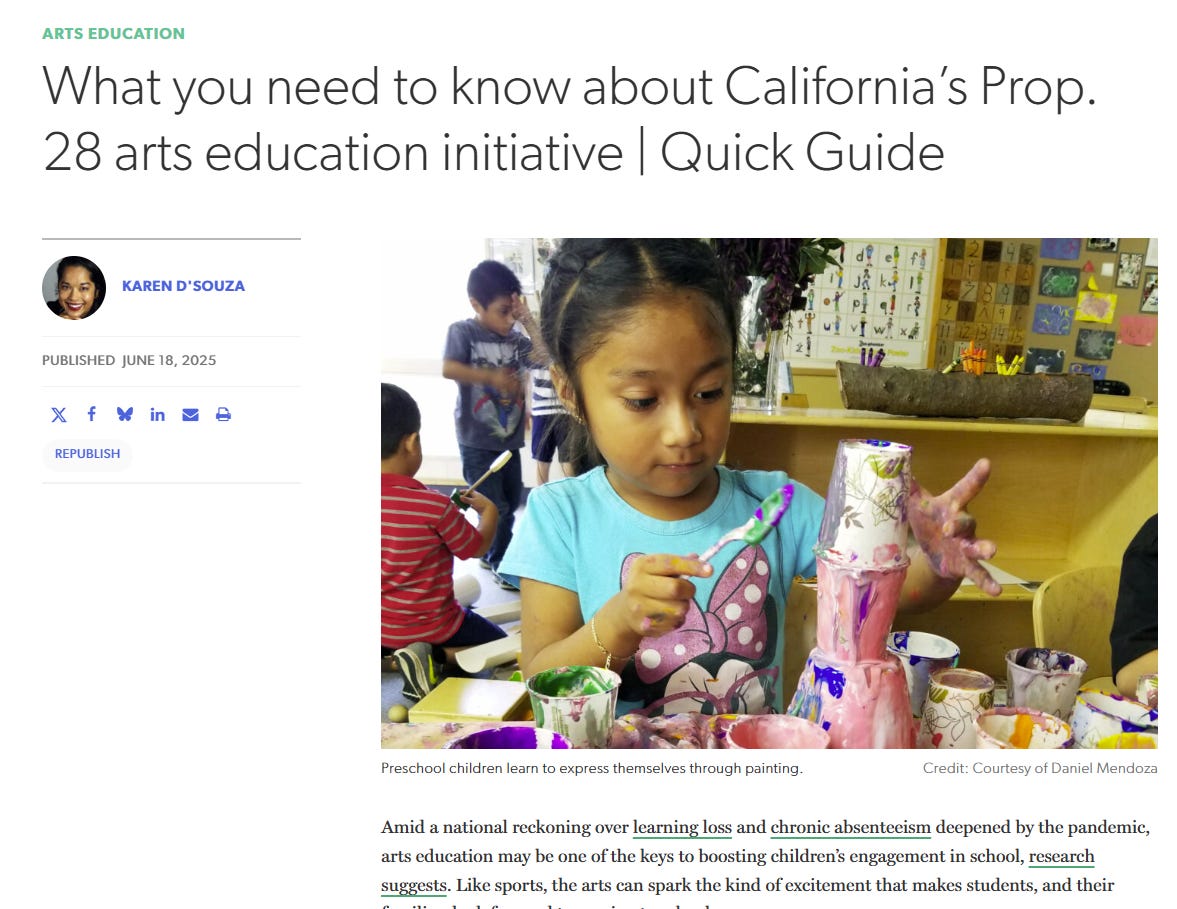
That means a underfunded public school in a school district needs to have a great music program which requires parents, students, teachers, community leaders and administrators to have the political will to even want to have great music education. We can’t rely solely on nonprofits or outside entities. When you have great music education in every school, those kids will grow up knowing who the hell Vivaldi is. That’s exactly how most of Europe does it. But here’s the problem. Even this is a solution that treats the symptoms not the disease. Apathy runs rampant in America and that is embedded in the foundation of this country. If we can’t have universal healthcare or free college, we are not getting universal arts education any time soon. So what do we as musicians have to do to help? What do we need to do our part?
Well, are you going to take time to out of your busy musician schedule to go:
Canvassing to convince parents to fund music education in the public schools?
Help elect school board members that prioritize music education?
Help remove corrupt administrators with six figure salaries in low-income school districts?
Attend PTA meetings? Participate in an LCAP meeting?
Most busy musicians can’t. It’s unrealistic.
And if we somehow pull off the impossible and put great music education in every public school? It will take 10-20 years to show results. You essentially need a whole new generation to start appreciating classical music.
So, classical music is on its way out. It has been misdiagnosed countless times when it has been suffering from a terminal illness and we mindlessly wasted our effort treating the symptoms instead of finding a cure.
It will be a miracle if it somehow became mainstream again. But I doubt it will. I would love to be wrong though. It is an important artform and we should fight for it, but it will take a generational movement to solve this.
To anyone currently in music school, I suggest diversifying your skillset not just in the musician sphere. That doesn’t mean you won’t have a career, it will just look a lot different in the future.